

About me
What does it take to move from designing industrial electrical systems to managing intelligent building projects for some of the world’s leading companies?
For me, the answer lies in continuous learning, practical experience, and a willingness to embrace new challenges.
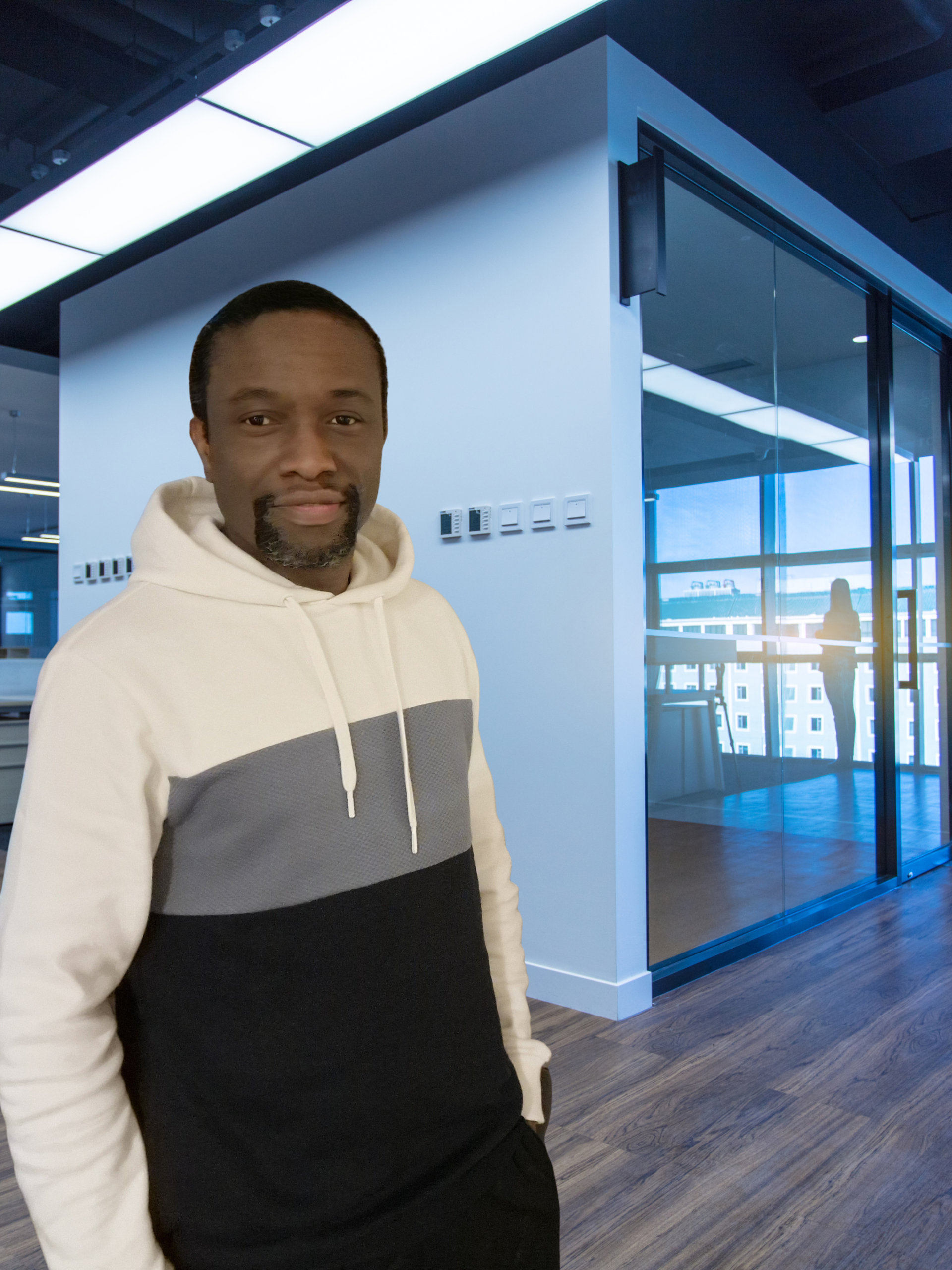
My name is Temitope Victor Owokole, and I am an electrical engineering professional currently working as a Building Management Systems (BMS) Project Manager at Standard Control Systems in Ireland.
My engineering journey has taken me across four countries, Germany, the Netherlands, Ireland, and Nigeria, where I have gained valuable experience in electrical power distribution, industrial automation, intelligent motor control, networking, and project management.
Along the way, I have worked in highly regulated industries, including oil and gas and manufacturing, with experience involving major organisations such as Shell, Nigeria LNG (NLNG), Seplat, and Procter & Gamble.
Today, I bring this experience into the building automation industry, where I manage and coordinate BMS projects for clients including Primark, Pfizer, and Microsoft..
My focus is simple: combining sound engineering principles, practical experience, and modern technology to deliver systems that work reliably in real-world environments.
This is the story of how my career has developed, the skills I have gained, and why I believe the future of engineering belongs to professionals who can connect different technologies.
Building My Career on a Strong Electrical Engineering Foundation
My professional journey began with a passion for understanding how electrical systems work and how they support industrial operations.
Over the years, I have developed practical experience in the design, installation, and implementation of low-voltage (LV) and medium-voltage (MV) electrical systems.
My experience includes working with:
- Low-voltage and medium-voltage switchgear.
- Electrical distribution boards and power distribution systems.
- Intelligent motor control centres (MCCs).
- Motor starters and electrical feeder control units.
- Industrial electrical protection, monitoring, and control systems.
- Electrical schematics, engineering drawings, and technical documentation.
One of the most interesting areas of my career has been working with intelligent motor control systems.
Unlike traditional motor control systems, intelligent motor control centres can provide useful information about equipment operation, motor status, electrical conditions, and system faults.
These capabilities help engineers and maintenance teams monitor equipment, improve fault identification, and support reliable industrial operations.
Working with these technologies gave me a better understanding of the relationship between electrical power, automation, and communication systems.
It also created a foundation for my later interest in networking, cybersecurity, and intelligent building technologies.
Learning from Highly Regulated Oil and Gas and Manufacturing Industries
A major part of my professional development came from working in industrial environments where safety, quality, technical compliance, and equipment reliability are extremely important.
My experience includes working with major organisations such as Shell, Nigeria LNG, Seplat, and Procter & Gamble.
These environments provided valuable opportunities to understand how large industrial facilities operate and why engineering standards must be followed carefully.
In the oil and gas industry, electrical and control systems are essential to safe and reliable operations. Equipment failures can affect production, safety, and business continuity.
Similarly, manufacturing facilities depend on reliable power distribution and motor control systems to keep production equipment operating efficiently.
These experiences helped me develop a professional approach based on careful planning, technical accuracy, proper documentation, teamwork, and attention to detail.
One important lesson I learnt is that good engineering is not only about designing a system that works. It is also about ensuring that the system is safe, reliable, maintainable, and suitable for its intended purpose.
That principle continues to influence how I approach engineering projects today.
Expanding My Engineering Experience Across Europe and Africa
One of the most rewarding aspects of my career has been the opportunity to work internationally.
I have gained engineering experience in Germany, the Netherlands, Ireland, and Nigeria.
Working across these countries has exposed me to different engineering practices, project environments, working cultures, and technical expectations.
My experience in Nigeria provided a strong foundation in industrial electrical engineering, particularly within the oil and gas and manufacturing sectors.
Working in European countries further broadened my understanding of engineering practices, technical coordination, and the importance of clear communication when working with multidisciplinary teams.
International experience has also taught me the value of adaptability.
Every project has its own technical requirements, challenges, stakeholders, and expectations. Being able to understand these differences and work effectively with people from different backgrounds is an important part of successful engineering delivery.
Today, I consider this international exposure one of the strengths I bring to my professional work.
Why I Added Networking and Cybersecurity to My Engineering Skills
As technology continues to develop, electrical engineering is becoming increasingly connected to computer networks, industrial communication systems, and cybersecurity.
Modern industrial facilities and intelligent buildings depend on connected devices, controllers, sensors, and software platforms that exchange information across communication networks.
I recognised the importance of understanding these technologies and decided to expand my knowledge beyond traditional electrical engineering.
I pursued professional development through Cisco certifications in Networking, Cybersecurity, and Network Security.
These certifications strengthened my understanding of network communication, network infrastructure, cybersecurity principles, and the security challenges associated with connected systems.
For an electrical engineering professional working with automation and control systems, this knowledge is particularly valuable.
A modern Building Management System, for example, may connect controllers, equipment, sensors, and monitoring platforms through an Internet Protocol (IP) network.
Understanding how these systems communicate, and the security principles required to protect connected infrastructure, provides a broader technical perspective.
I believe the integration of electrical engineering, automation, networking, and cybersecurity will continue to play an important role in the development of modern industrial facilities and intelligent buildings.
My Transition into Building Management Systems Project Management
In July 2026, I began a new chapter in my career when I joined Standard Control Systems in Ireland as a BMS Project Manager.
This role brings together many areas of my previous experience, including electrical engineering, control systems, technical coordination, and project delivery.
A Building Management System is used to monitor and control different building services, including heating, ventilation, air conditioning, and other connected systems.
These systems help building operators manage equipment performance, monitor operating conditions, and improve the efficiency and reliability of building services.
As a BMS Project Manager, my responsibility is to coordinate the different activities required to deliver these projects successfully.
My work involves maintaining close relationships with clients, coordinating internal engineering teams, managing project deliverables, and supporting installation and commissioning activities.
Some of my key responsibilities include:
Project Planning and Client Coordination
Managing day-to-day project activities, communicating with clients and contractors, monitoring project progress, and ensuring that responsibilities and outstanding actions are clearly understood.
Engineering Design Coordination
Working with the Computer-Aided Design (CAD) team on panel wiring schematics and with the BMS design team on control narratives, control strategies, software, and front-end graphics.
Technical Documentation
Reviewing project requirements, BMS points lists, engineering drawings, and technical submittals. Where information is unclear or incomplete, coordinating Requests for Information (RFIs) to obtain the necessary clarification.
Procurement and Equipment Coordination
Coordinating the procurement and delivery of field devices, control panel equipment, and other project materials required for installation and commissioning.
Panel Manufacturing and Delivery
Supporting the coordination of Motor Control Centre (MCC) and control panel manufacturing activities, including technical information, equipment availability, and delivery requirements.
Installation and Commissioning Coordination
Working with installation and commissioning resources to ensure that planned activities are aligned with project requirements, engineering readiness, and site progress.
Project Documentation and Commercial Coordination
Monitoring engineering deliverables, project records, costs, variations, and handover requirements throughout the project lifecycle.
The role requires more than technical knowledge. It also involves communication, organisation, problem-solving, teamwork, and the ability to manage different priorities.
What I particularly enjoy is the opportunity to connect engineering design with actual project delivery.
My electrical engineering background helps me understand the technical requirements, while my project management responsibilities allow me to contribute to the wider coordination and successful completion of each project.
Managing BMS Projects for Leading International Organisations
In my current role at Standard Control Systems, I have been involved in managing and coordinating BMS projects for clients including Primark, Pfizer, and Microsoft.
These projects provide an opportunity to apply my engineering knowledge within different commercial and technical environments.
Each project has its own requirements, engineering challenges, programme expectations, and coordination needs.
My responsibility is to help ensure that engineering information, equipment procurement, project documentation, installation activities, and commissioning resources are properly coordinated.
Working on projects for recognised international organisations reinforces the importance of maintaining professional standards, communicating clearly, and delivering technical work with care and attention.
It has also strengthened my understanding of how building automation projects depend on collaboration between many disciplines, including electrical, mechanical, controls, software, and site engineering teams.
For me, this is one of the most valuable aspects of BMS project management.
Successful project delivery is not simply about completing individual tasks. It is about ensuring that different people, systems, and activities work together towards a common objective.
Connecting Electrical Engineering, Automation, and Digital Technology
Looking back at my professional journey, I see a clear connection between the different areas in which I have developed experience.
Electrical engineering provided my technical foundation.
Industrial automation introduced me to intelligent equipment and control systems.
Networking helped me understand how devices and systems communicate.
Cybersecurity expanded my awareness of the risks and protection principles associated with connected technology.
BMS project management now allows me to bring these areas together in a practical engineering environment.
Although these disciplines have different purposes, they increasingly overlap in modern engineering projects.
For example, an intelligent building may depend on electrical distribution systems, control panels, connected sensors, programmable controllers, communication networks, and supervisory software working together.
Understanding the relationship between these systems helps engineers communicate more effectively and make informed technical decisions.
I am particularly interested in how this integration can support more reliable, efficient, and secure building and industrial infrastructure.
My Professional Philosophy: Unlearn, Relearn, and Grow
One principle that has guided my professional journey is the importance of continuous learning.
Engineering is constantly evolving. Technologies change, industry expectations develop, and new challenges require different approaches.
The knowledge that was sufficient several years ago may not be enough to address the demands of modern engineering systems.
This is why I believe in the philosophy of Unlearn, Relearn, and Grow.
To me, this means being willing to question old assumptions, improve existing skills, and develop new knowledge when necessary.
My transition from industrial electrical engineering into networking, cybersecurity, and BMS project management reflects this philosophy.
I do not see these career developments as separate journeys. Instead, I see them as different stages of a continuous professional development process.
Every experience has contributed to my ability to understand engineering challenges from a broader perspective.
Looking Ahead: Intelligent Buildings, Industrial Automation, and Secure Connected Systems
As the engineering industry continues to evolve, I am interested in opportunities that bring together electrical infrastructure, industrial automation, intelligent buildings, and connected technologies.
My professional interests include the development and delivery of reliable electrical systems, effective building automation solutions, improved project management practices, and greater awareness of cybersecurity in connected engineering environments.
I also enjoy sharing practical engineering knowledge and learning from other professionals.
Through this website, I hope to share my experiences, technical insights, professional development journey, and lessons from working across different industries and countries.
My goal is to contribute to meaningful engineering discussions while building professional relationships with people and organisations who share an interest in engineering excellence and technological development.
Let’s Connect and Explore Opportunities
My professional journey has taken me from industrial electrical engineering in Africa to engineering environments across Europe, and now into Building Management Systems project management in Ireland.
Along the way, I have gained experience in electrical power distribution, intelligent motor control, industrial automation, networking, cybersecurity, and multidisciplinary project delivery.
I believe this combination of technical knowledge, practical experience, and international exposure provides a strong foundation for future opportunities and collaborations.
I welcome connections with engineering professionals, project managers, technology specialists, recruiters, and organisations working across electrical engineering, industrial automation, intelligent building systems, and related technologies.
Whether you are interested in professional networking, exchanging technical knowledge, discussing engineering opportunities, or exploring potential collaborations, I would be pleased to connect.
Engineering is about more than systems and technology. It is about solving problems, connecting ideas, and creating solutions that make a difference.
Let’s connect, share knowledge, and explore new possibilities.
Temitope Victor Owokole
Electrical Engineering Professional | BMS Project Manager | Industrial Automation | Cisco-Certified Networking & Cybersecurity
Ireland

Desiring to transition into I.T?
You will find this new book useful.
Blog
Stay On Top Of The
Latest News
-
Did You Know Saying Thank You To ChatGPT Costs Millions?
Is It true that saying “please” and “thank you” to ChatGPT costs OpenAI millions of dollars?
-
Encrypted. You Need To Trust Your Instinct
Maya’s instincts screamed danger. Rajiv’s warning echoed in her mind: “Trust no one at Nexus.”
-
This Powerful Web App Will Simplify Subnetting For You
Whether you’re an IT administrator, a network engineer, or a business owner looking to streamline network infrastructure, our brand-new Subnet…
-
12 Powerful Keys to Unlock Divine Clarity in Life’s Trials
Life is full of challenges. At times, we feel lost, confused, or unsure about the next step. When trials come,…
-
Try This Easy To Use Binary And Decimal Converter
Are you learning networking, computer systems, or subnetting? Struggling with binary and decimal conversions? Worry no more! Our Decimal &…
-
Easy To Use Subnet Mask and IP Address Calculator
Easily Calculate Your Subnet Mask, Network Address & Broadcast Address Understanding subnetting is crucial for efficient IP address management, and…
-
Canada Relocation Secrets Most People Don’t Know
Relocating to Canada for greener pastures is a dream for many, but only a few know the little-known secrets that…
-
Discover the Ultimate Guide to Relocating Abroad Via Canadian Work Permit Route
Are you dreaming of relocating to Canada through the work permit route? Navigating the process can seem overwhelming, but with…
-
How to Relocate to Europe via Tuition-Free Study Route
Are you dreaming of relocating to Europe via a tuition-free study route? Then you need to read this post.
-
You Need To Reach Your Full Potential To Live The Life You’re Capable Of
Is something deep down within you telling you that you need to reach your full potential so you can live…
-
How to Break Through Job Hunting Struggle in 2025 and Beyond
Job hunting struggles can feel like a battlefield, but with the right tools and mindset, you can win the fight.…